Thursday, June 8, 2017

The Battle of Midway


Before we begin our game on Tuesday you need some background on the Battle of Midway. View each of these links in order starting with the text for part A. The last video is the full version of the short video. You should watch it at home if you're interested in more information. Be sure to take the quiz on part B.

A. Here is an overview text of the battle:

http://www.ducksters.com/history/world_war_ii/battle_of_midway.php

B. Now try out the quiz:

Quiz on MIdway

C. Here is a short video on the battle:


If you liked that video then here is the full video!


Wednesday, May 31, 2017

Some Maryland fun

See how well you do on this quiz about Maryland geography! You might have to guess at some of them.

Slide show quiz


See if you can locate all MD counties in this quiz!

County quiz


Try out this MD history quiz. You might want to use your textbook to help!

MD history quiz


Friday, May 12, 2017

Research for Maryland Counties

Hi all,

Here´s a little help for your research on MD counties for Monday´s paragraph. Feel free to fill me in on anything else you find!

Maryland Kids
MD Kids

This is a MD government site with all sorts of cool information on MD. Give it a look and see what´s there. Be sure to check out the Geography tab.

This Wiki could be useful too!

List of counties in Maryland

This Pinterest could be useful too.

Pinterest

Here´s a great little overview video of MD counties.


Another county quiz!

MD county quiz


Wednesday, May 10, 2017

Link for the PARCC pretest

During the PARCC practice time be sure to use this link to get into the pretest:

Parcc Pretest

When you get to the PARCC test page select the Fourth Grade tab. Then pick one of the three on-line pretests. There are Unit 1-3 tests there, so if you have already taken the Unit 1 test then go to the Unit 2 text and so on.

Remember, you only have about 20 minutes to work on this test so get to the test quickly and start working. You don´t have to finish the test. It´s just practice for next week!

When your time is up log out.


Tuesday, May 9, 2017

Class Tasks for 5/9

Work with your team to complete this organizer for at least 4 books. Start it in your reading journal, then complete the worksheet I'll pass out to you tomorrow. Everyone MUST do Lotus Seed. After that you may choose which books to do. You may use any book on your table.


Our “Big” Questions
Questions
Texts Read
Lotus Seed
Your choice
Your choice
Your choice
Why do people leave their homes?


What did immigrants expect to find in America?
What was the trip to America like?
Did the immigrants find what they expected?
What did immigrants gain?

What did they lose?

Monday, May 8, 2017

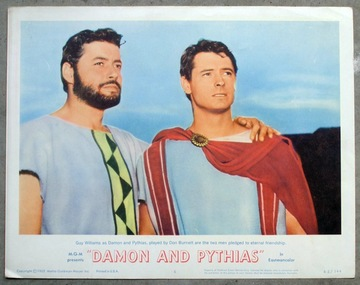
Damon and Pythias resources

Here are some things to help you.


Here is a play that was performed by 3rd Graders


Here is a summary of the story with some questions that can help you.

Damon and Pythias

Your task: Create a presentation that shows me how the character, the King, changed from the beginning of the play to the end. Be sure to show me this change through his words, actions, and demeanor (body language).

Monday, May 1, 2017

Continents Review

The continents are the 7 major land masses that contain most of the Earth’s dry land masses. Watch this video and catch-up on what these places are.


See if you and research and find the answers to these questions. Write your answers in your Social Studies journals.

  1. What continent do we live on?
  2. Which continent is our sister (shares a similar name) continent?
  3. Which continent has the most number of people living on it?
  4. Which has the fewest? This continent is also a country!
  5. Which continent is in all four hemispheres?
  6. Which continent shares a land mass with Asia?

Monday, January 2, 2017


GRADE 4 SOCIAL STUDIES LITERACY TASK


This week we will be working on the literacy task assigned to us by PGCPS. This task will have use research Abraham Lincoln and his actions during the Civil War through two texts and a video. We will then create an essay that explains how the authors used reason and evidence to support the points that they make about Lincoln's leadership characteristics as he served our country.
:

 Here is the prompt:


Today you will research information about President Abraham Lincoln.  You will read an excerpt called “Maryland Divided” adapted from My World Social Studies Text and then you will watch the video  “Abraham Lincoln.” Finally, you will read an excerpt from “Lincoln: A Photobiography” by Russell Freedman. As you review these sources, you will gather information from different authors about  President Lincoln’s leadership characteristics so you can write an essay.  


SOURCES:

1. “Maryland Divided”: Adapted from My World Social Studies Text

2. Video: “Abraham Lincoln

3. Excerpt from Lincoln: A Photobiography by Russell Freedman


You have read two excerpts and watched one video about President Abraham Lincoln. You read  “Maryland Divided” that explained about how President Lincoln handled many difficulties in the Civil War. The video, “Abraham Lincoln” explained about President Lincoln’s life and accomplishments, and in the excerpt from “Lincoln: A Photobiography” by Russell Freedman, the author explained how President Lincoln was able to issue the Emancipation Proclamation and pass the 13th Amendment.


Write an essay explaining how each author uses reasons and evidence to support the points made in the texts about President Lincoln’s leadership characteristics as he served our country. Support your essay with information from all three sources.

Here are some useful background videos.
Here's a useful video about the Battle of Antietam
https://www.youtube.com/watch?v=GYdzni6rV04

And a final video about the  Emancipation Proclamation
https://www.youtube.com/watch?v=cwNTwuHAf1M

This one is a bit more boring, but probably less annoying!
https://www.youtube.com/watch?v=xh3-9R7Q0OE


Here are the sources you must use...


“Maryland Divided” Adapted from My World Social Studies Text
The Nation Divided
In 1860, Abraham Lincoln was elected President of the Unites States. Slavery had been a major issue in the campaign, and Lincoln wanted to avoid a war over it. He worried that the issue could destroy the Union (the United States). He feared that the Union could not survive if it were made of slave states and free states, or Border States like Maryland.
    After the election of 1860, 11 Southern states left the Union. They formed a new nation called the Confederate States of America. The Confederate States believed that they had the right to decide certain matters for themselves, and especially the right to continue slavery.  They did not want the national government to force them to end slavery. Some people in Maryland agreed with them. But Maryland stayed in the Union.
The Civil War in Maryland
    Lincoln’s worst fears came true in April 1861. The Civil War began. As a border state, Maryland could not avoid the war. Just a week after the war began, people who supported the Confederates attacked Union soldiers in Baltimore.  Twelve people died in what was called the Baltimore Riot.
    For four years, armies marched across the state. Seven major battles were fought in Maryland with one of the bloodiest battles of the war happening just outside of Sharpsburg Maryland in 1862.  There Confederate and Union armies fought at the Battle of Antietam and more than 23,000 soldiers were either wounded or killed.
After Antietam, President Lincoln took an important step to ending slavery.  On 1863, he presented the Emancipation Proclamation.  Emancipation means the act of making someone free.  It was supposed to free enslaved people in the Confederate states. But many slave owners kept their workers enslaved.
    The war was difficult for everyone. Most Maryland soldiers fought for the Union army,  but there were thousands that fought for the Confederates. Families were split in their loyalties and brothers often fought brothers.  At home, some women helped to farm and others sewed uniforms or cared for the wounded.  The proclamation did not free enslaved Marylanders.  During the war, many had run away to freedom. Some African Americans fought in the Union army.  Then, in November 1864, Maryland lawmakers decided to write a new constitution. It made slavery against the law in the state. The Union won the war in April 1865.  The United States remained one nation.  Slavery was ended.
A Terrible Loss for The Nation
Friday evening, April 14, 1865, President Lincoln and his wife, Mary, attend a play at Ford’s Theater. During the play, the audience was surprised to hear a gunshot. This was followed by Mary Lincoln’s screams. President Lincoln had been shot!
Lincoln was assassinated, or murdered for political reasons by John Wilkes-Booth, a 26-year-old actor who supported the Confederacy. Booth had not worked alone, and Lincoln was not the only target.  The whole group of conspirators was captured, tried, and punished by death by a military court.  
In December of 1865, the United States government passed the Thirteenth Amendment to the U.S. Constitution. This amendment made slavery illegal in all states.
Reconstruction
After President Lincoln’s assassination, Vice President Andrew Johnson became president.  President Johnson wanted to carry out Lincoln’s plan for Reconstruction, the rebuilding and healing of the country. However, Johnson lacked Lincoln’s skill at dealing with people. He and Congress fought fiercely.  
Adapted from My World Social Studies Texts

Excerpt from Lincoln: A Photobiography by Russell Freedman

GRADE 4
Excerpt from Chapter called “Emancipation” pp.85-91

The war had become an endless nightmare of bloodshed and bungling generals. Lincoln doubted if the Union could survive without bold and drastic measures. By the summer of 1862, he had worked out a plan that would hold the loyal slave states in the Union, while striking at the enemies of the Union.

On July 22, 1862, he revealed his plan to his cabinet. He had decided, he told them, that emancipation was  “a military necessity, absolutely essential to the preservation of the Union.” For that reason, he intended to pass a proclamation freeing all the slaves in rebel states that had not returned to the Union by January 1, 1863. The proclamation would be aimed at the Confederate South only. In the loyal Border States, he would continue to push for gradual compensated emancipation.

Some cabinet members warned that the country wasn’t ready to accept emancipation. But most of them nodded their approval, and in in any case, Lincoln had made up his mind. He did listen to the objection of William H. Seward, his secretary of state. If Lincoln published his proclamation now, Seward argued, when Union armies had just been defeated in Virginia, it would seem like an act of desperation, “the last shriek on our retreat.” The president must wait until the Union had won a decisive military victory in the East. Then he could issue his proclamation from a position of strength. Lincoln agreed. For the time being, he filed the document away in his desk.

A month later, in the war’s second battle at Bull Run, Union forces commanded by General John Pope suffered another humiliating defeat. “We are whipped again,” Lincoln moaned. He feared now that the war was lost. Rebel troops under Robert E. Lee were driving north. Early in September, Lee invaded Maryland and advanced toward Pennsylvania.

Lincoln again turned to General George McClellan- Who else do I have? he asked- and ordered him to repel the invasion. The two armies met at Antietam Creek in Maryland on September 17 in the bloodiest single engagement of the war. Lee was forced to retreat back to Virginia.  But McClellan, cautious as ever, held his position and failed to pursue the defeated rebel army. It wasn’t the decisive victory Lincoln had hoped for, but it would have to do.

On September 22, Lincoln read the final wording of his Emancipation Proclamation to his cabinet. If the rebels did not return to the Union by January 1, the president would free ”thenceforward and forever” all the slaves everywhere in the Confederacy. Emancipation would become a Union war objective. As Union armies smashed their way into rebel territory, they would annihilate slavery once and for all.
From the chapter called: “This Dreadful War” p.112-113

“Lincoln regarded the election as a mandate to push forward with his emancipation program. For months he had been urging Congress to pass a constitutional amendment that would outlaw slavery everywhere in America, not just in the rebel South, but in the loyal border states as well. Lincoln knew that his Emancipation Proclamation, a wartime measure, could be overturned at any time by the courts, by Congress itself, or by a future president. A constitutional amendment would get rid of slavery permanently.
As the winter of 1864 began, Lincoln put tremendous pressure on congressmen who opposed the amendment. The final vote came on January 31, 1865, when a cheering House of Representatives approved the Thirteenth Amendment, prohibiting slavery in the United States. Lincoln hailed the vote as a “great moral victory.” William Lloyd Garrison, the Boston abolitionist who had often criticized Lincoln, now called him “presidential chain-breaker for millions of the oppressed.”
A month later, on March 4, Lincoln stood before the Capitol and took his oath of office a second time. The pressures of the war showed clearly in the president’s face. His features, a friend noted, were “haggard with care, tempest tossed and weatherbeaten.”
Lincoln had thought long and deeply about the horrors of the war, trying to understand why the nation had been swept up into such violence, destruction, and death. At first the issue had seemed to be the salvation of the Union, but, in the end, slavery had become the issue. The war had demonstrated that the Union could survive only if it were all free.”

Thursday, December 15, 2016

Unit 2, Lesson 4: Growth and Change in Maryland Part 2

Changes in Industry

Open your book to page 64. Now watch this video.

Now read p. 64. As you read write the definitions in your journal for Industrial Revolution and mill. When you finish reading and writing definitions answer this question in your journal.

Number these events 1-3 in the order that they happened. Write them in order in your journal.

____________. As businesses grew, there were more jobs in Baltimore.

____________ Many people moved to Baltimore.

___________ Baltimore became an important port.

Now watch this video.


Now read page 65 in the text. Be sure to write the definition for canal in your journal.

Now look at the map on page 65. Tell me how you would travel from Elkton in northeastern Maryland to Cumberland. Tell me the mode of transportation and what town you would travel from. For example your trip could start with you taking a boat from Elkton to Baltimore or you could ride a coach from Elkton to Baltimore too. Now describe the rest of the trip! Write your answer in your journal and be ready to discuss it in class.

Unit 2, :Lesson 4: Growth and Change in Maryland Part 1

Part 1: pp. 62-63 Maryland and the War of 1812

Watch this video....

Or if this is too silly then check out this one.

Now read pp. 62-63 and answer the question at the bottom of page 63. Write three causes (what started the war) of the War of 1812 and circle one effect (what it caused) of the war. Write your answer in your journal.

If you finish early go on to the next page and read about Changes in Maryland Industry and about its roads, canals, and railroads.

Sunday, September 18, 2016

Social Studies Unit 1, Lesson 2: College Park

Here are a few things I've found about College Park.

Links

Here's a general search for College Park: Link
The Wikipedia Article: Link

Here are a few videos


College Park is a pretty amazing place!!

Saturday, September 17, 2016

Social Studies Unit 1, Lesson 2: Local Government

Hi all,

Great job on all of the wonderful projects that we saw on Friday. All of them showed lots of effort and imagination. Keep up the good work!

This week we are moving from talking about the state government and are moving down to the local level. Local governments are the governments that control a smaller location. States in the United States are split into large areas, usually rural locations, called counties.  Prince George's County is such a place. These counties include smaller, but heavily populated locations called cities (like College Park). Counties and cities are very similar in that they have governments, police departments, libraries, school systems (especially in large cities like Baltimore and Washington), and other services.

So for this lesson we will be looking at cities and counties in general, and at Prince George's County and the City of College Park in particular.

As you do your reading and research be sure to answer these questions in your journal:

1. What is a county?
2. What is a city?
3. How are they a like? How are they different?
4. Why is there a need two have these two levels of government?
5. What would life be like if we didn't have local governments like these?
6. Who are the leaders of PG County and College Park? What do they do for their residents?

The cool thing about this level of government is that you might actually be able to talk to these people! Make an effort to reach out and talk to them if you can.

Here are some links to get you going.

PG County

A basic search: PG County
Wikipedia: PG County
The government's site: Site
Videos
A link to PG County's government YouTube channel: Link

I'll be putting up information on College Park later today!

Mr. C

Friday, September 9, 2016

Hop in, say "hi, and look at the posts below

Hey 4th Grade,

Glad to see so many of you were able to get your email accounts up and going. Please take a moment to comment below and say "hi". Also be sure to check out the links in the post below because some of them will help you with your presentation on Friday.

Have a great weekend and enjoy the blog!

Mr. C

Saturday, September 3, 2016

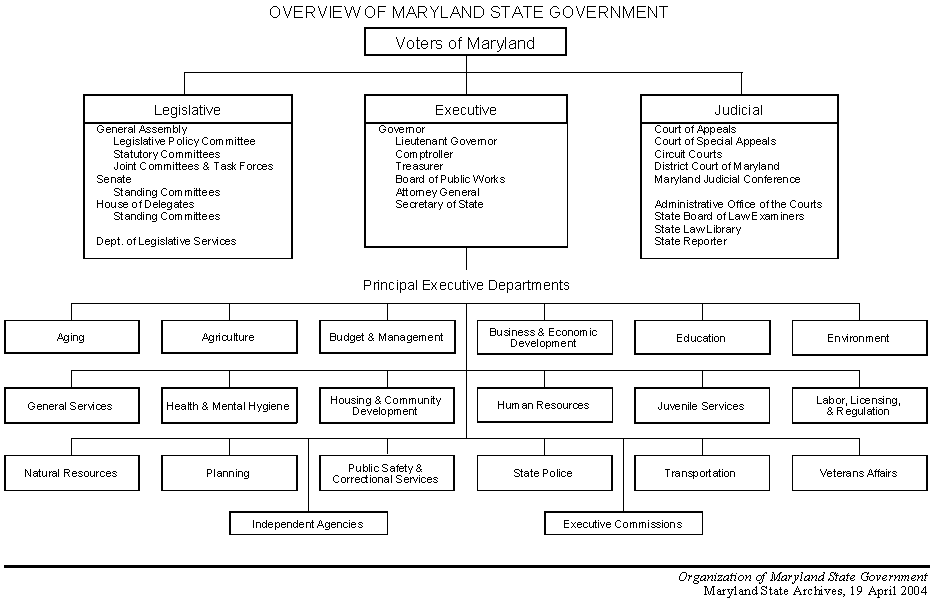
Social Studies Lesson 1: Organization and Powers of the Maryland State Government

Hey guys,

Welcome to the Fourth Grade and your first research project! In this lesson you'll research how the MD government is organized and what the powers are for each branch.


Here are some interesting pictures:

Here are a couple of useful links:

This is an official State of Maryland site. Link
This is another State of Maryland site that is more kids friendly: Link

These videos could be of some use:

General information on Maryland


This video is for California, but it is pretty similar to Maryland. Be careful though, states have different names for their legislatures!

Another, shorter video on governmental organization.


Here's a rap about the Federal government. Maybe an idea for songwriters out there?

Here's a copy of the assignment sheet I gave out in class yesterday just in case you need it.


Name_______________________________  Date________________________________


Social Studies Project #1: How is the Maryland State Government organized?


Prompt: Create a presentation using Powerpoint, posters, or some other media that can explain to your audience (other 4th Graders) how the Maryland State Government is organized. You must create at least 4 slides: one to introduce your presentation, one slide for each branch of the Maryland government. You can create a conclusion slide for extra credit.

·         The introduction slide should have a quick breakdown of the Maryland government and should show how it is organized.

·         The three body slides should cover each branch of the government. The slide should name what it is and tell what it does and what its powers are.

·         The conclusion slide should wrap-up your discussion of the government and summarize what you just said about the Maryland government. This slide is worth extra credit points.

·         You will give a presentation that should last 5 minutes or less!


To get the best grade possible be sure to:

·         Use capitalization when necessary.

·         Use correct spelling.

·         Use punctuation such as periods where it is needed.

·         Use some sort of graphic or picture to show what you mean.

Timeline

Rough draft of design (on paper)
Due Friday, September 9th.
5 pt
Rough draft of design (in a final form).
Due Wednesday, September 14th.
5 pt
Final draft of design in its final form.
Due Friday, September 16th.
5 pt
In class presentation.
Will be done on Friday, September 16th and/or Monday September 19th.
10 pt
Extra Credit.
Concluding slide or poster.
2 pt


 Mr. Case and Mr. Bustos will be checking progress on this project on the dates mentioned above. Students should use their textbook pages pp. 82-87 and they can use on-line resources such as Mr. Case’s Blog Spot site (www.mrcasesspot.blogspot.com). They are also welcome to use their own on-line resources and the library as well.


Don't forget to make a comment below so you can get a buzz buck on Tuesday! Be sure to say your name and class.

Tuesday, May 24, 2016

Chapter 14, Lesson 2: How is Sound Made?

Chapter 14, Lesson 1 What is Sound Energy?

1.  You are to answer the "question" of your lesson.
2.  You may use pictures, sketch, shows charts, timelines, or whatever graphics will help you answer the question.  In other words you must have text features on your "sticky".
3. Present your findings to the class and Mr. Case!!

Tuesday, May 17, 2016

Chapter 14: Sound and Light

Homework for 5/17/2016.

Go to page 402 and 403.  Write down the vocabulary words on page 403 and match them up with the pictures (by reading).  Then look up each word and write a definition for each word.

Also check out these videos:

Sound


Light


Thursday, May 12, 2016

Chapter 13, Lesson 5: How is magnetism transformed to electricity?

Today you'll be looking at the text and select videos to answer this guiding question:  How is magnetism transformed to electricity?

First check out this video:


This one too!


Now open to page 390.

Read over p 390 and 391, and be sure to check out the illustrations, then go to page 391 and answer the checkpoint question:

What happens when a magnet is moved back and forth inside a coiled wire?

Now read over 392 and 393.  Be sure to check out the the time line on page 392 for the major events in the discovery and use of electricity.

Now answer the check point on p. 393:

How do magnets help generators produce electricity?

So now give it a shot-

How is magnetism transformed into electricity???